Core Conclusion
The Information’s latest report reveals a structural change underway: Moonshot AI and other Chinese AI companies are considering restructuring their corporate architecture, abandoning overseas-registered entities at the technical level in favor of registering companies within China.
The direct trigger for this move is the rescinding of the Meta-Manus deal — cooperation between American tech giants and Chinese AI companies is being reshaped by geopolitical forces.
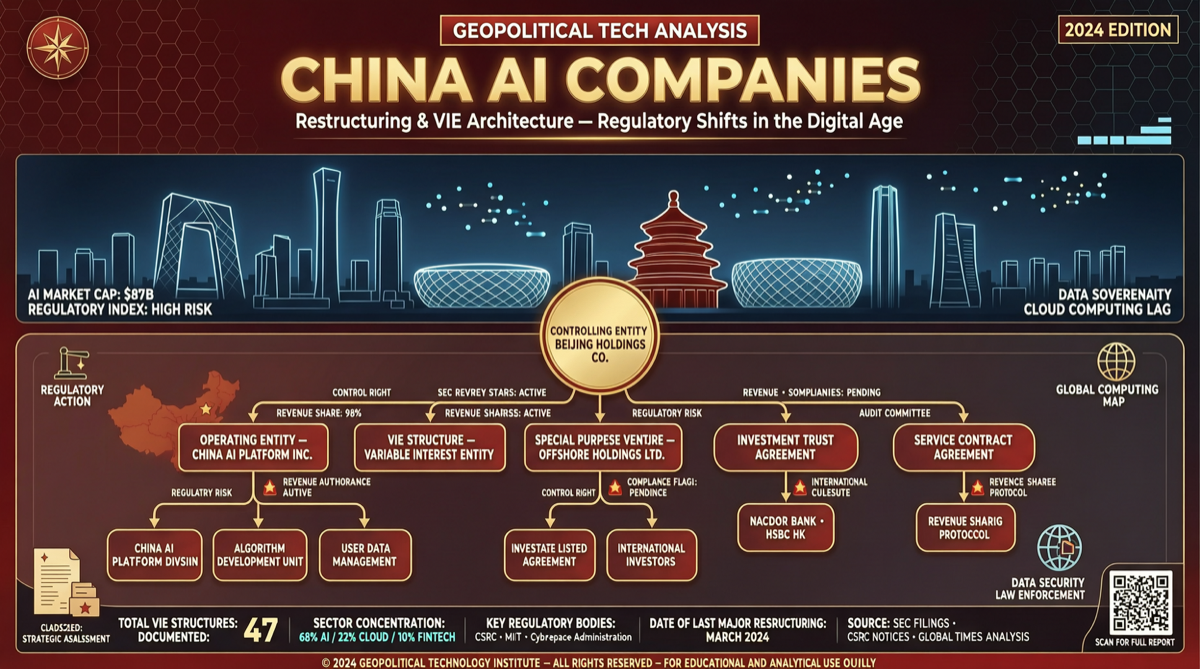
What is VIE Architecture? Why Change Now?
VIE (Variable Interest Entity) is a long-used overseas architecture for Chinese tech companies:
- Overseas Registration: Holding companies registered in the Cayman Islands, BVI, etc.
- Contractual Control: Control of domestic operating entities through contracts rather than equity
- Overseas Listing: Overseas entities listed on NASDAQ/HKEX
The typical VIE architecture:
Investors → Cayman Holding Company → Contractual Control → China Domestic Operating Company
                  ↑
             Overseas Listing Entity
What these companies are now considering is the reverse operation — moving both holding and operations back to China.
Why Now? Three Driving Factors
1. The Meta-Manus Deal Precedent
The Meta-Manus partnership being blocked sends a clear signal: direct cooperation between American tech giants and Chinese AI companies faces regulatory risk. This is not a single deal issue, but a systemic risk.
2. Continued Tightening of US AI Export Controls
From chip bans to model export restrictions, US AI technology blockade against China continues to escalate. For Chinese AI companies dependent on overseas tech stacks, VIE architecture no longer provides sufficient “safety buffer.”
3. Opening of China’s Domestic Capital Markets
China is increasing capital support for the AI industry. Moonshot AI and other companies may find that returning to domestic architecture makes it easier to access domestic financing and policy support.
Affected Companies
| Company | Product | Impact Level | Reason |
|---|---|---|---|
| Moonshot AI | Kimi | High | Already considering restructuring |
| MiniMax | Hailuo AI | Medium-High | Peer company follow-on effect |
| Zhipu AI | GLM | Medium | Already has substantial domestic entities |
| DeepSeek | DeepSeek | Medium | Open-source model less affected by geopolitics |
Impact on China’s AI Ecosystem
Short-Term Pain
- Narrowed overseas financing channels: After VIE restructuring, overseas VC investment paths become more complex
- Restricted tech cooperation: Cooperation with US companies may face stricter scrutiny
- Talent flow blocked: Overseas recruitment and talent exchanges may be affected
Long-Term Restructuring
- Domestic capital accelerates entry: The launch of “domestic large model ETF” investment plans already shows this trend
- Tech stack localization: Greater reliance on domestic chips (e.g., Ascend) and open-source frameworks
- Market focus shifts inward: From “global competition” to “deep cultivation of domestic market”
Landscape Judgment
The essence of the VIE restructuring wave is that global AI competition is escalating from a “technology race” to a “system confrontation”. When company architecture itself becomes a bargaining chip in geopolitical games, the globalization narrative of the AI industry is being rewritten.
For Chinese AI companies, this is a “passive choice”: not that they don’t want globalization, but the globalization path is systematically narrowed. But for the domestic ecosystem, this may accelerate the formation of an “internal circulation” — more capital, more talent, more innovation flowing back to the domestic market.
Action Recommendations
- Watch policy signals: Whether the VIE restructuring wave receives official tacit approval or support
- Assess investment path changes: Overseas investors need to find new compliant investment channels
- Track tech stack adjustments: Observe whether these companies are simultaneously adjusting their tech stacks (e.g., shifting to domestic chips)
- Note competitive landscape changes: After returning to domestic, competition among Chinese AI companies may become more intense