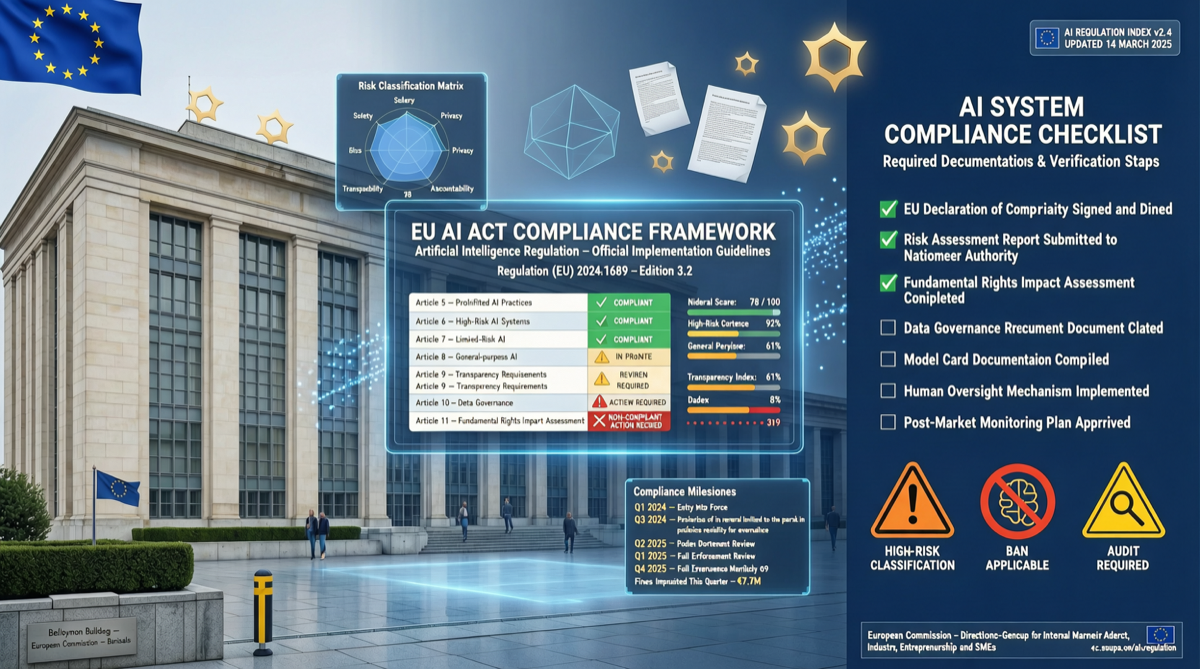
Conclusion: 90 Days Countdown, AI Compliance Moves from “Recommendation” to “Mandatory”
Less than 90 days remain before the EU AI Act Article 50 transparency obligations take effect. Starting August 2, 2026, all AI products operating within the EU—whether for internal or external use—must meet transparency requirements, or face fines of up to 7% of global revenue.
This is not a “recommendation,” not “best practice,” but a legal mandate.
Who Is Affected?
Simply put: almost everyone.
| Scenario | Affected | Explanation |
|---|---|---|
| AI products serving EU users | ✅ | Regardless of company headquarters location |
| AI tools used internally by EU companies | ✅ | Internal tools also require compliance |
| API calls processing EU user data | ✅ | Every link in the data processing chain |
| Open-source AI models | ⚠️ | Depends on deployment method |
| Pure research use | ❌ | Academic research typically exempt |
Key point: Even if your company is registered in China, the US, or any non-EU region, as long as your AI products serve EU users or process EU data, you must comply.
Article 50 Specific Requirements
Three Core Obligations
-
AI Content Labeling
- AI-generated content must be clearly labeled
- Includes text, images, audio, video
- Labels must be clearly visible, not hidden in user agreements
-
Digital Watermarking
- AI-generated media must embed detectable watermarks
- Watermarks must be identifiable by standard tools
- Even if users remove watermarks, the system must still be able to trace
-
Audit Logging
- Record key information about AI decisions
- Includes input data, model version, output results
- Logs must be retained long enough for regulatory review
Additional Requirements for High-Risk AI Systems
If your AI system is classified as “high-risk” (healthcare, hiring, law enforcement, critical infrastructure, etc.), you also need:
- Decision explanation capability
- Formal verification methods
- Human oversight mechanisms
- Regular compliance audits
Fine Structure
| Violation Type | Fine Cap | Typical Case |
|---|---|---|
| Using prohibited AI systems | 7% global revenue | Social credit scoring, real-time remote biometric identification |
| Not meeting transparency obligations | 3% global revenue | Unlabeled AI-generated content |
| Providing false information | 1.5% global revenue | False compliance claims |
Note: 3% of global revenue for large enterprises could mean billions of dollars. This is not a “pay a fine and keep going” issue, but a risk that could shake a company financial foundation.
Action Checklist: Compliance Steps That Must Be Completed Within 90 Days
Days 1-30: Assessment and Mapping
- Inventory all AI products operating in the EU
- Determine risk classification for each product
- Identify specific compliance gaps
- Designate a compliance officer
Days 31-60: Technical Implementation
- Implement content labeling system
- Deploy watermarking solution
- Establish audit logging mechanism
- Update user interface to display AI identification
Days 61-90: Verification and Documentation
- Internal compliance audit
- Third-party compliance assessment (high-risk systems)
- Prepare compliance documentation
- Employee training
Impact on Chinese Companies Going Global
For Chinese AI companies targeting the European market, this is not just a technical issue:
- Time is tight: 90 days is insufficient to build a compliance system from scratch
- Technical barrier: Watermarking and logging systems require engineering investment
- Legal risk: Unfamiliarity with EU legal systems may lead to underestimating risk
- Competitive opportunity: Compliance capability itself can become a market differentiation advantage
Practical Tools Recommended
- Compliance Self-Assessment Tool: EU AI Act official provides a compliance self-assessment questionnaire
- Watermarking Solution: C2PA standard is becoming the industry common approach
- Logging Framework: Open-source AI audit logging frameworks are already available
- Legal Consultation: Recommend contacting legal advisors familiar with EU AI regulations early
AI compliance is moving from “nice to have” to “essential for survival.” In 90 days, AI products without compliance labels will face substantial risk in the European market. Start preparing now, and there is still time.