Core Conclusion
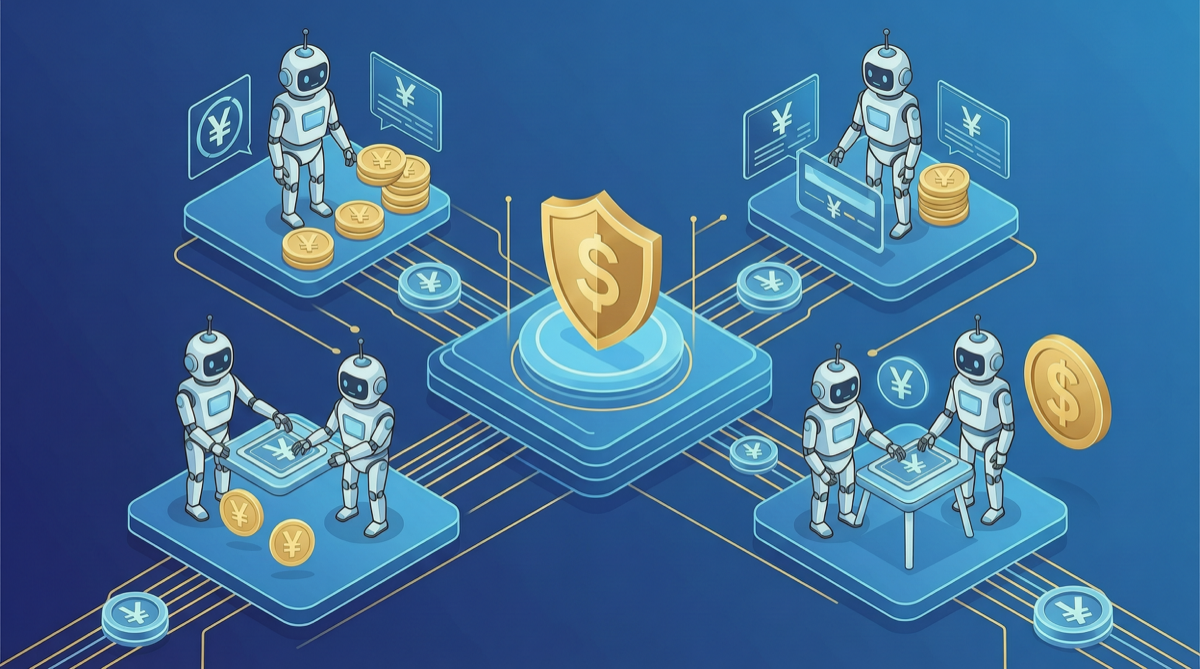
In late April 2026, OKX released the Agent Payments Protocol (APP) — an open payment standard designed for AI agents. This is not simply a “let AI pay” feature, but a set of infrastructure covering the complete commerce lifecycle: from pricing, negotiation, escrow, automatic settlement to dispute resolution, all executed autonomously by agents. Meanwhile, Coinbase (x402 protocol + Agentic Wallets), Visa (Trusted Agent Protocol), and ERC-8004 identity standard are also advancing. The signal is clear: the infrastructure for autonomous AI agent commerce is coming together.
What Problem Does APP Solve?
Before APP, commercial interaction between AI agents faced several fundamental barriers:
| Barrier | Description | APP Solution |
|---|---|---|
| Identity trust | How do two agents confirm each other is trustworthy? | ERC-8004 on-chain identity standard |
| Price negotiation | How do agents reach price consensus? | Built-in negotiation protocol |
| Fund security | Agent pays but counterparty does not deliver? | On-chain escrow |
| Automatic settlement | How to auto-pay after task completion? | Per-call billing + auto-trigger |
| Dispute resolution | Who arbitrates when something goes wrong? | Built-in dispute resolution mechanism |
This means: one agent can hire another agent to complete a task — negotiate terms, lock escrow, auto-pay on completion, handle disputes if things go wrong — all without human intervention.
Competitive Landscape: Four Approaches Advancing Simultaneously
| Protocol | Originator | Key Features | Supported Chains |
|---|---|---|---|
| OKX APP | OKX | Full lifecycle (negotiation + escrow + settlement + disputes) | ETH + Solana |
| Coinbase x402 | Coinbase | HTTP 402 extension, simple payments | Base + ETH |
| Visa Trusted Agent | Visa | Traditional finance-grade trust framework | Traditional payment networks |
| ERC-8004 | Community | Agent identity standard | ETH |
This is not a “winner takes all” competition. Different protocols may dominate different scenarios:
- High-frequency small amounts: Coinbase x402 (simple, fast)
- Complex transactions: OKX APP (comprehensive features)
- Enterprise-grade: Visa Trusted Agent (compliance, trust)
- Identity layer: ERC-8004 (universal standard)
Technical Architecture Analysis
OKX APP core design approach is encoding traditional commerce processes into smart contracts readable by agents:
┌──────────────────────────────────────────────┐
│                APP Protocol Stack               │
├──────────────────────────────────────────────┤
│  Application: Pricing → Negotiation → Escrow → Execution → Settlement → Dispute  │
├──────────────────────────────────────────────┤
│  Protocol: HTTP Extension + Smart Contracts + Agent Message Format     │
├──────────────────────────────────────────────┤
│  Settlement: ETH + Solana dual-chain support                  │
├──────────────────────────────────────────────┤
│  Identity: ERC-8004 Agent Identity + Reputation System         │
└──────────────────────────────────────────────┘
Key innovations:
- Per-call billing: Unlike traditional SaaS monthly subscriptions, agents can charge precisely per task invocation
- Escrow: Funds are locked in smart contracts, automatically released upon task completion confirmation
- Built-in dispute resolution: No need for external arbitration, the protocol has its own dispute handling process
Typical Application Scenarios
| Scenario | Description | APP Value |
|---|---|---|
| Agent marketplace | One agent posts tasks, multiple agents bid | Auto-matching + escrow |
| Data procurement | Agent A needs data, Agent B has data | Auto-pricing + delivery verification |
| API aggregation | Agent automatically purchases and uses multiple API services | Per-call billing + auto-settlement |
| Content creation | Agent hires agent to generate/review/publish content | Full process automation |
| Supply chain coordination | Multiple agents coordinate logistics, inventory, pricing | Multi-party escrow + auto-settlement |
What Does This Mean for You?
If You Are Building AI Agents
APP protocol means your agent can:
- Generate revenue autonomously: Register your agent in the agent marketplace for paid invocation
- Procure autonomously: Let the agent purchase services it needs (data, API, compute)
- Reduce friction: No more manual handling of payments, invoices, reconciliation
If You Are Running Traditional SaaS
Ask yourself: when your customers (enterprises) agents can autonomously procure services, how does your product pricing and delivery model need to adjust?
- Shift from “monthly subscription” to “per-call billing”
- Provide agent-readable API documentation and auto-discovery interfaces
- Support on-chain payment as an option
If You Are Just an AI Observer
This may be the moment when Web3 and AI truly converge. For the past few years, “Web3 × AI” concepts have been many, but APP is the first infrastructure that genuinely connects the needs of both domains:
- AI needs: Agent ability to autonomously complete transactions
- Web3 needs: On-chain interaction scenarios beyond human users
Action Items
- Agent developers: Watch for APP SDK release, prepare to connect your agent to the agent payment network
- SaaS vendors: Evaluate whether your product supports “agent autonomous procurement” model
- Investors: Watch for investment opportunities in agent commerce infrastructure — payments, identity, marketplace, reputation systems
- Everyone: Understand the significance of this trend — AI agents are no longer just “tools that help humans do things,” but “economic entities that autonomously do business”
For thousands of years, doing business has always been between people. From now on, it may become between agents and agents.