The Bottom Line
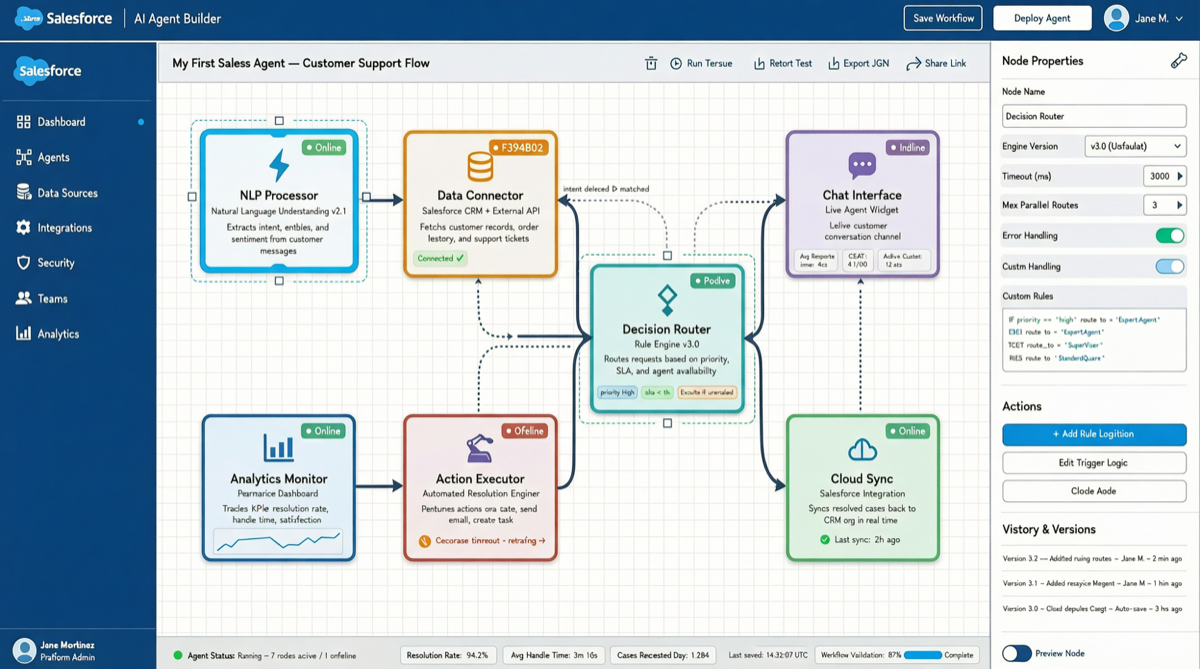
Salesforce is doing something ambitious with Agentforce + Vibe IDE: enabling non-technical business users to build and deploy AI Agents within the enterprise. This isn’t just a tech news story—it’s a change in the rules of enterprise software.
What Happened
Key changes in Salesforce Spring ‘26:
1. Agentforce Becomes Platform Core
Agentforce is no longer an add-on feature—it’s the strategic center of the entire platform. This means:
- All Salesforce products (Sales Cloud, Service Cloud, Marketing Cloud) will have Agent capabilities as standard
- Agents can directly access enterprise CRM data, something other AI platforms can’t do
2. Vibe IDE Launch
Vibe IDE is Salesforce’s new development environment with core features:
- Natural language driven: Describe the Agent behavior you want through conversation
- Visual orchestration: Drag-and-drop Agent workflow and decision tree building
- Instant testing: Run and debug Agents directly in the IDE
- One-click deployment: From development to production in one click
3. Web Console IDE
For more professional developers:
- Full Agent development environment
- Custom tool integration support
- Deep integration with Salesforce API and data model
Why Salesforce’s Agent Strategy Matters
Data Moat is the Biggest Advantage
Other AI Agent platforms face the biggest problem of not having data. Salesforce naturally owns:
| Data Type | Salesforce Has | Other Platforms Need |
|---|---|---|
| Customer Info | ✓ Natively stored | API integration required |
| Sales Pipeline | ✓ Real-time updates | Data sync needed |
| Service Tickets | ✓ Complete history | Manual import needed |
| Marketing Data | ✓ Omnichannel tracking | Third-party integration |
When Agentforce’s Agents can directly read this data, their “intelligence” naturally far exceeds general-purpose Agents.
Enterprise Market Position
Salesforce’s position in the Enterprise market determines Agentforce’s diffusion speed:
- 150K+ enterprise customers: Agentforce’s customer base already exists
- Existing workflows: No need to change core systems, just overlay Agents
- Compliance and Security: Salesforce’s enterprise-grade security certifications are hard for startups to replicate
Comparison with Startup Agent Platforms
| Dimension | Salesforce Agentforce | Hermes/OpenClaw Open-Source |
|---|---|---|
| Entry Barrier | Low (Vibe IDE) | Medium (technical background needed) |
| Data Access | Native CRM data | Self-integration required |
| Customization Flexibility | Medium (platform-limited) | Extremely high (fully open-source) |
| Cost | Higher (Salesforce licensing) | Low (open-source free) |
| Use Cases | CRM-related enterprise Agents | General/technical Agents |
Implications for Startups
Salesforce’s move draws a clear boundary line for all Agent startups:
If your Agent product targets Enterprise CRM scenarios, Salesforce is your biggest competitor.
But this is also an opportunity:
- Non-CRM scenarios (legal, manufacturing, education) are areas Salesforce hasn’t covered
- SMBs may not afford Salesforce licensing costs
- Technical teams still prefer open-source flexibility and control
Action Items
If You Use Salesforce
- Experience Vibe IDE now: Describe your most wanted automated CRM workflow in natural language
- Start simple: Auto-reply to common customer questions, auto-update sales opportunity status
- Evaluate costs: Agentforce pricing model not fully announced, watch for updates
If You’re an Agent Startup
- Avoid Salesforce’s territory: Don’t go head-to-head on CRM Agents
- Leverage open-source flexibility: Hermes, OpenClaw far exceed closed-source platforms in customization
- Target SMBs: Salesforce’s price barrier is your opportunity
If You’re an Enterprise IT Decision Maker
- Evaluate Agentforce ROI: If you’re already a heavy Salesforce user, Agentforce’s marginal cost may be very low
- Compare open-source: If your tech team is strong enough, open-source may be more flexible and cheaper
- Don’t just look at features, look at ecosystem: The long-term value of an Agent platform lies in its ability to connect more tools and data sources