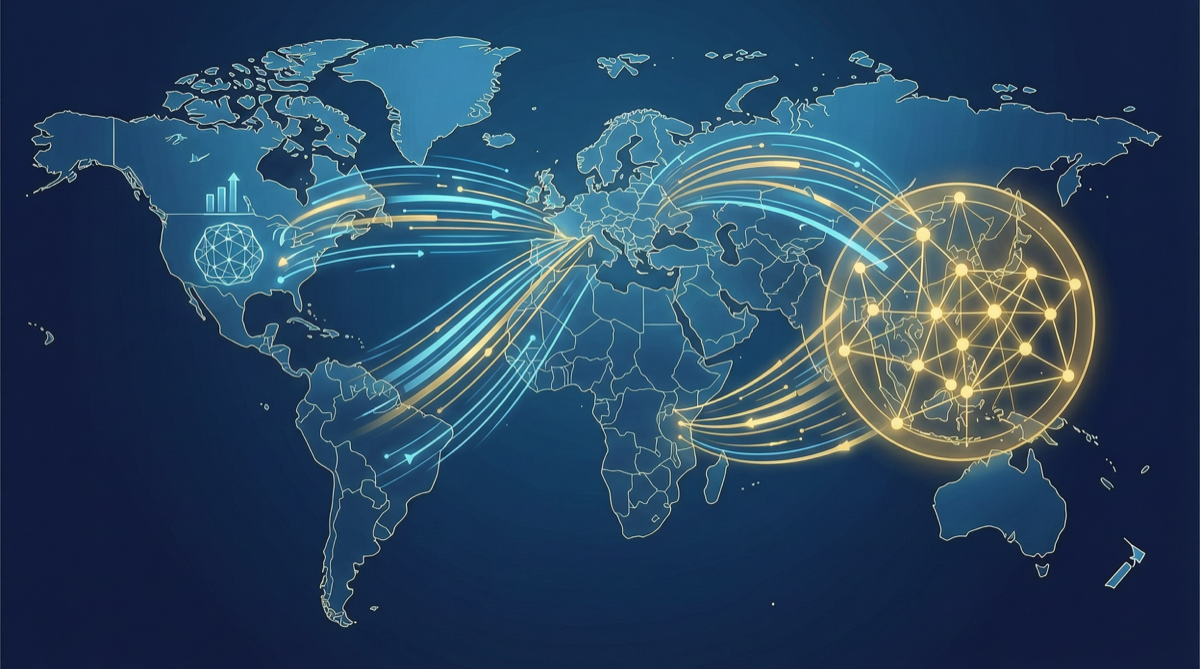
In late April 2026, a diplomatic cable from the U.S. State Department to embassies worldwide was obtained and reported by multiple media outlets. The core allegation is highly specific: three leading Chinese AI companies—DeepSeek, Moonshot AI (Kimi’s parent), and MiniMax—are accused of systematically “distilling” model capabilities from American AI labs.
The Specific Allegations
The operational methods described in the cable are shocking:
| Allegation Dimension | Specific Data | Companies Involved |
|---|---|---|
| Fake accounts | 24,000+ accounts | DeepSeek, Moonshot AI, MiniMax |
| API interactions | 16 million+ interactions | Primarily targeting Claude API |
| Time span | Second half of 2025 to present | Ongoing |
| Alleged method | ”Unauthorized knowledge distillation” | Collecting input-output pairs at scale via API |
Anthropic is the primary complainant. The company discovered its API being used by a large number of anomalous accounts, whose behavioral patterns showed highly organized characteristics—not for actual use, but for systematically collecting model input-output pairs to train their own models.
What is “Distillation”? Why is it Sensitive?
Knowledge Distillation is itself a legitimate technique: using the output of a large “teacher model” as training data to train a smaller, more efficient “student model.”
Legitimate Distillation vs. Alleged Distillation:
| Dimension | Legitimate Distillation | Alleged Operation |
|---|---|---|
| Data source | Public model outputs or authorized API calls | Large-scale fake accounts, violating terms of service |
| Scale | Limited, controlled | 16 million+ interactions, systematic |
| Transparency | Publicly disclosed | Covert operation |
| Purpose | Model compression, efficiency optimization | Replicating competitors’ core capabilities |
The core of the dispute is not about distillation technology itself, but about how the data was obtained. Anthropic and OpenAI’s terms of service explicitly prohibit using API outputs to train competing models.
OpenAI’s Parallel Allegation
Notably, OpenAI also raised similar allegations last month, specifically naming DeepSeek. The two American AI labs acting almost simultaneously indicates this is not an isolated incident but a systemic issue.
Timeline:
- February 2026: Anthropic first publicly accused Chinese companies of distilling via Claude API
- March 2026: OpenAI followed, specifically naming DeepSeek
- April 27, 2026: State Department diplomatic cable issued, elevating corporate allegations to governmental diplomatic action
- Late April 2026: Multiple international media reports
Chinese Companies’ Response and Rebuttal
Among the accused Chinese companies, DeepSeek has explicitly denied the allegations. Its core rebuttal arguments are:
- Legitimacy of API usage: All interactions were conducted through public API interfaces using legitimately obtained access credentials
- Technical independence: DeepSeek’s model architecture (MoE) and training methods differ fundamentally from Claude’s
- Open-source contribution: DeepSeek is itself a significant contributor to the open-source community, with its model weights and training methods all publicly available
Moonshot AI and MiniMax have not issued formal statements to date.
The Deeper Geopolitical Game
The timing of this diplomatic cable is noteworthy—it coincides with several other events:
- Escalation of U.S. chip controls on China: NVIDIA’s special H20 chips face further restrictions
- DeepSeek V4 release: Reaching international first-tier performance at prices far below U.S. competitors
- Chinese AI company valuations surging: Moonshot AI seeking $18 billion valuation, 4x increase in 90 days
- Chinese AI companies accelerating overseas expansion: DeepSeek, Qwen and others rapidly increasing global adoption
From the U.S. perspective, this is a combination: chip controls limit Chinese AI companies’ compute access, distillation allegations limit their data and capability access, and diplomatic actions signal to allies.
Industry Impact
For U.S. AI Companies:
- API terms of service will tighten further, potentially introducing stricter access restrictions and monitoring
- Anthropic and OpenAI may push for legislation classifying “API distillation” as intellectual property protection
For Chinese AI Companies:
- Overseas business faces greater compliance risk and geopolitical uncertainty
- May need to adjust API usage strategies and increase transparency with international partners
- Long-term, this accusation may accelerate the self-reliance process of China’s AI ecosystem
For Global Developers:
- API prices may rise further (providers need to cover compliance costs)
- Cross-country/region model calls may face more restrictions
- Open-source models’ value will further increase—they are not bound by API terms of service
Judgment and Outlook
Regardless of the ultimate facts of these allegations, one trend is certain: the “tech cold war” in AI is expanding from chips to data and models.
For Chinese AI companies, the real moat is not distilled capabilities from others, but independent innovation capability. DeepSeek’s breakthrough in MoE architecture, Qwen’s leadership in long-context processing, Kimi’s exploration in Agent capabilities—these are competencies that cannot be accused or restricted.
The outcome of the distillation dispute will not be determined by diplomatic cables, but by who can make genuinely original breakthroughs in the next generation of models.