The Event
Warp — previously operating as a closed-source commercial AI terminal product — has officially open-sourced its core codebase. Within just 3 days of the announcement, GitHub stars have surpassed 49,000, with 8,399 new stars today, securing the #1 spot on GitHub Trending.
The project uses a dual-license model: the UI framework (warpui_core and warpui) is under MIT, while the rest of the codebase uses AGPL v3. OpenAI participated as the founding sponsor of this open-source release.
Key Developments
1. From “AI Terminal” to “Agentic Development Environment”
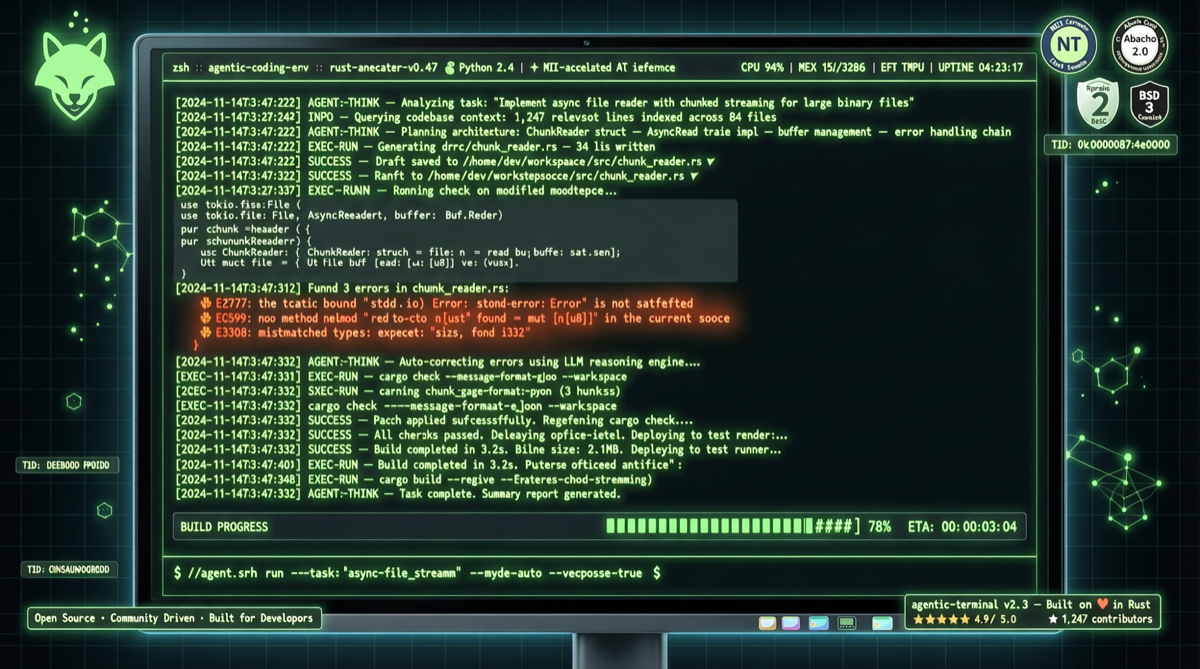
Warp has redefined its positioning: no longer just a terminal with AI assistance, but an Agentic Development Environment. Users can choose to use the built-in coding agent or freely connect external CLI agents — including Claude Code, Codex, Gemini CLI, and other mainstream options.
2. Oz Agent-Driven Open Source Collaboration
The Warp open-source repository itself is a demonstration of agent-native workflows:
- Oz Agents automatically handle Issues: auto-triage, write specs, implement code, review PRs
- build.warp.dev contributor dashboard: real-time visibility into thousands of Oz Agent work sessions, top contributors, and in-progress features
- Terminal replays of agent sessions viewable directly in the browser
The .agents/skills and .claude directories in the repo contain agent skill configurations, with the latest commit (1 hour ago) still updating PR requirements.
3. Rust Tech Stack + Mature Contribution Process
The project is written entirely in Rust, with a complete local build process already provided:
./script/bootstrap   # platform-specific environment setup
./script/run         # build and run
./script/presubmit   # formatting, clippy checks, tests
The contribution workflow is carefully designed: issues are reviewed by maintainers and labeled ready-to-spec or ready-to-implement, which any developer can pick up.
Why This Matters
Signal Strength: Very High. An AI terminal team with an established commercial product choosing to go fully open source is uncommon in the current AI tool landscape. Warp’s prior accumulation of paying users suggests the open-source decision signals a strategic pivot toward a community-driven agentic platform.
Actionable Next Steps:
- Developers can try it immediately: Download the Warp client or build from source to experience the agentic terminal workflow
- Agent framework developers should pay attention: Warp’s support for multiple CLI agent integrations could become a standardized entry point for agent frameworks
- Open source contributors can participate: Join the community via the
#oss-contributorsSlack channel;build.warp.devprovides transparent development status tracking
Competitive Landscape Shift: As Warp transitions from closed to open source, Ghostty (another high-performance cross-platform terminal) faces new competitive pressure. Meanwhile, Warp’s open integration strategy for Claude Code, Codex, and Gemini CLI may push the industry toward standardizing “terminal as agent runtime.”
Data Snapshot
| Metric | Value |
|---|---|
| GitHub Stars | 49,597 |
| Stars Today | 8,399 |
| Forks | 3,253 |
| Language | Rust |
| License | MIT + AGPL v3 |
| Open Source Since | ~3 days ago |
| Founding Sponsor | OpenAI |