Bottom Line First
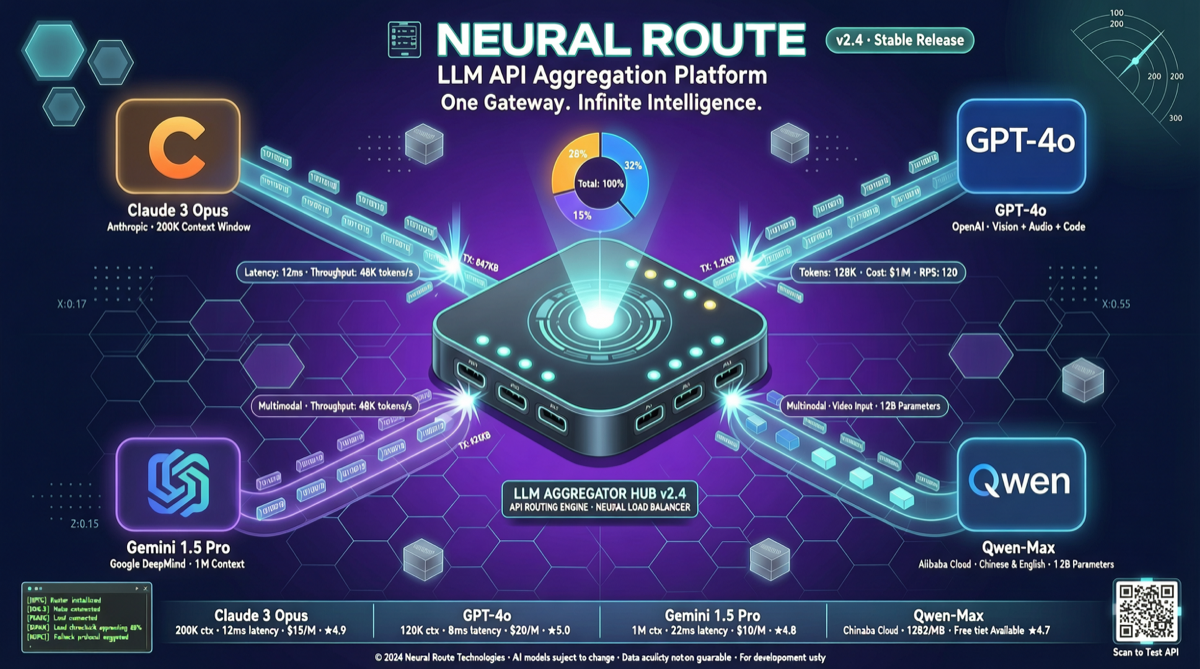
The LLM API market is experiencing consolidation at the payment layer. WorldRouter, a new member of the WLFI ecosystem, packs 300+ models including Claude Opus 4.7, GPT-5.5, Gemini 2.5 Pro, and Qwen 3 into a single account, with all models priced at 30% below official rates.
This is not just about “cheaper” - it solves three pain points that have plagued developers for a long time:
- Multi-account management: Previously needed separate accounts for OpenAI, Anthropic, Google, Alibaba, and more
- Price fragmentation: Each model had different pricing units, tiered pricing, and cache strategies
- Fallback routing: When a model was rate-limited or down, there was no automatic switch to a backup
Price Comparison
WorldRouter’s published pricing (USD / 1M tokens):
| Model | Official Input -> Output | WorldRouter Input -> Output |
|---|---|---|
| Claude Opus 4.7 | $15 / $75 | $10.5 / $52.5 |
| Claude Sonnet 4.5 | $3 / $15 | $2.1 / $10.5 |
| GPT-5.5 | $10 / $50 | $7 / $35 |
| Gemini 2.5 Pro | $2.5 / $10 | $1.75 / $7 |
| Qwen 3-235B | $3 / $15 | $2.1 / $10.5 |
Note: The website states “subject to prices at time of release” - actual prices may fluctuate with market conditions.
Technical Architecture
At its core, WorldRouter is an LLM aggregation routing layer with the following workflow:
Developer Request -> WorldRouter Gateway -> Smart Routing -> Target Model API
                                              |
                                         Fallback Queue (backup models)
                                              |
                                 Unified Response Format Returned
Key capabilities:
- Smart Routing: Dynamically selects the optimal model based on latency, cost, and availability
- Fallback Mechanism: Automatically switches to backup when the primary model is rate-limited or unavailable
- Unified Authentication: One API Key for all models
- Unified Billing: No need to check separate bills from each provider
How Can They Offer 30% Discounts?
Official prices are set directly by model providers. WorldRouter’s ability to offer 30% discounts likely comes from:
- Bulk Purchasing: Enterprise-level volume procurement from each API provider at wholesale rates
- WLFI Ecosystem Subsidy: As WLFI ecosystem infrastructure, part of the cost is covered by tokenomics
- Shared Caching: Cross-user prompt cache sharing reduces the actual cost of repeated requests
Risk Note: The long-term stability of third-party aggregation services is worth considering - if upstream providers change partnership terms or adjust API policies, the pricing advantage could shrink.
Comparison with Similar Products
| Dimension | WorldRouter | LiteLLM / OpenRouter | Direct Official |
|---|---|---|---|
| Model Count | 300+ | 200+ | 1-10 per provider |
| Price | 30% below official | Close to official | Official pricing |
| Smart Routing | Yes | Basic | No |
| Unified Billing | Yes | Yes | No |
| Ecosystem Tie | WLFI | Independent | Provider-specific |
Practical Implications for Developers
Good fit for:
- Teams that need to test multiple models simultaneously
- Startups that need frontier model capabilities on a tight budget
- Production environments requiring high-availability fallback mechanisms
Not ideal for:
- Enterprises with strict data compliance requirements (requests pass through a third party)
- Scenarios requiring direct partnership with model providers
- Latency-sensitive high-frequency applications (the extra routing layer adds latency)
Conclusion
WorldRouter represents a trend: the LLM API market is shifting from “fragmented retail” to “aggregated wholesale.” When 300+ models can be called through a single interface at uniformly lower prices, developers have no reason to maintain multiple scattered API integrations.
But the aggregation layer itself faces trust questions - after all, all your requests pass through it. Before choosing, it is worth evaluating data compliance and provider stability.